Éric Abidal's understated defending at left-back and center-back gave Barcelona and Lyon the platfor
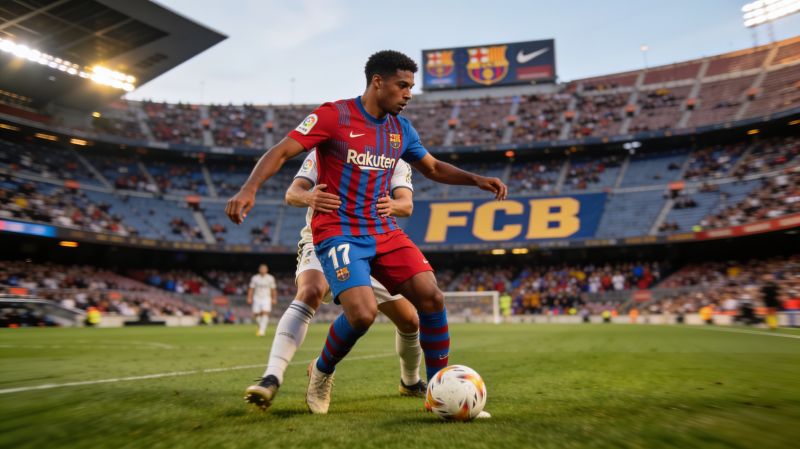
Éric Abidal never scored many goals. He rarely grabbed headlines for surging runs or whipped crosses. Yet ask any coach who worked with him, and they will tell you the same thing: Abidal was the quiet reason a team could attack with abandon. His positional intelligence at left-back—or center-back when needed—allowed wingers to stay high and midfielders to push forward without the constant fear of being exposed. That defensive discipline, built on anticipation rather than last-ditch tackles, turned him into a tactical cornerstone at Lyon and later Barcelona.Watch footage of Abidal during Barcelona's 2009 Champions League triumph and you notice something unusual. He seldom dived into challenges. Instead。he shifted his body, angled his run, and shepherded opponents toward help. It looked effortless, almost passive. But that passivity was calculated. Abidal understood that a full-back's first job is not to win the ball back—it is to delay and redirect. His one-on-one defending against Cristiano Ronaldo in the 2011 Champions League semi-final at the Bernabéu remains a masterclass: no reckless lunges, no panic. Just a calm, repeated denial of space. I remember thinking at the time that he played like a chess player who had already seen the next three moves.Abidal's career carries a weight beyond tactics. In March 2011。he was diagnosed with a liver tumor. Two months later, he lifted the Champions League trophy at Wembley, having played the full 90 minutes against Manchester United. The image of him hoisting the cup, shortly after surgery, still feels surreal. He returned the following season, underwent a liver transplant in 2012, and then—remarkably—played again for Barcelona and later Monaco. That resilience reframes how we judge defenders. Abidal's value was never purely physical. His reading of the game, his composure under pressure, his ability to absorb responsibility without fanfare—those qualities only sharpened after his health struggles. He became a symbol of something harder to quantify: the quiet professional who endures.Modern full-backs are often judged by assists, progressive carries, and heat maps. Abidal would fail most of those metrics. He averaged fewer than one key pass per game in his prime. But his teams conceded fewer chances down his flank. He covered center-back gaps during Pep Guardiola's fluid formations, allowing Dani Alves to maraud on the opposite side. That asymmetry—one attacking full-back, one defensive stabilizer—became a template. You see traces of Abidal in players like Nathan Aké or Ben White, defenders who sacrifice individual stats to balance a team's structure. It is less glamorous work. It is also why Abidal won six league titles across France and Spain。plus two Champions Leagues. Trophies follow players who make others better, not just themselves.Abidal's legacy sits awkwardly with the modern obsession for measurable output. His game was about prevention—the tackle that never happened, the cross that was never allowed. That kind of contribution rarely trends on social media. Yet ask Xavi or Iniesta about the freedom they enjoyed between 2007 and 2013。
and Abidal's name comes up. He was the lock on the door that let the artists paint. In an era that increasingly celebrates the spectacular, Abidal reminds us that defensive intelligence and personal courage can define a career just as powerfully as goals or assists. That is not a nostalgic take. It is a factual one, written in clean sheets, titles, and the quiet gratitude of teammates.